
About
The Dominican House of Studies
The Dominican House of Studies traces its mission to the preaching charism and Catholic intellectual heritage bequeathed to the Order of Preachers by its founder, St. Dominic de Guzmán.
Our Origin
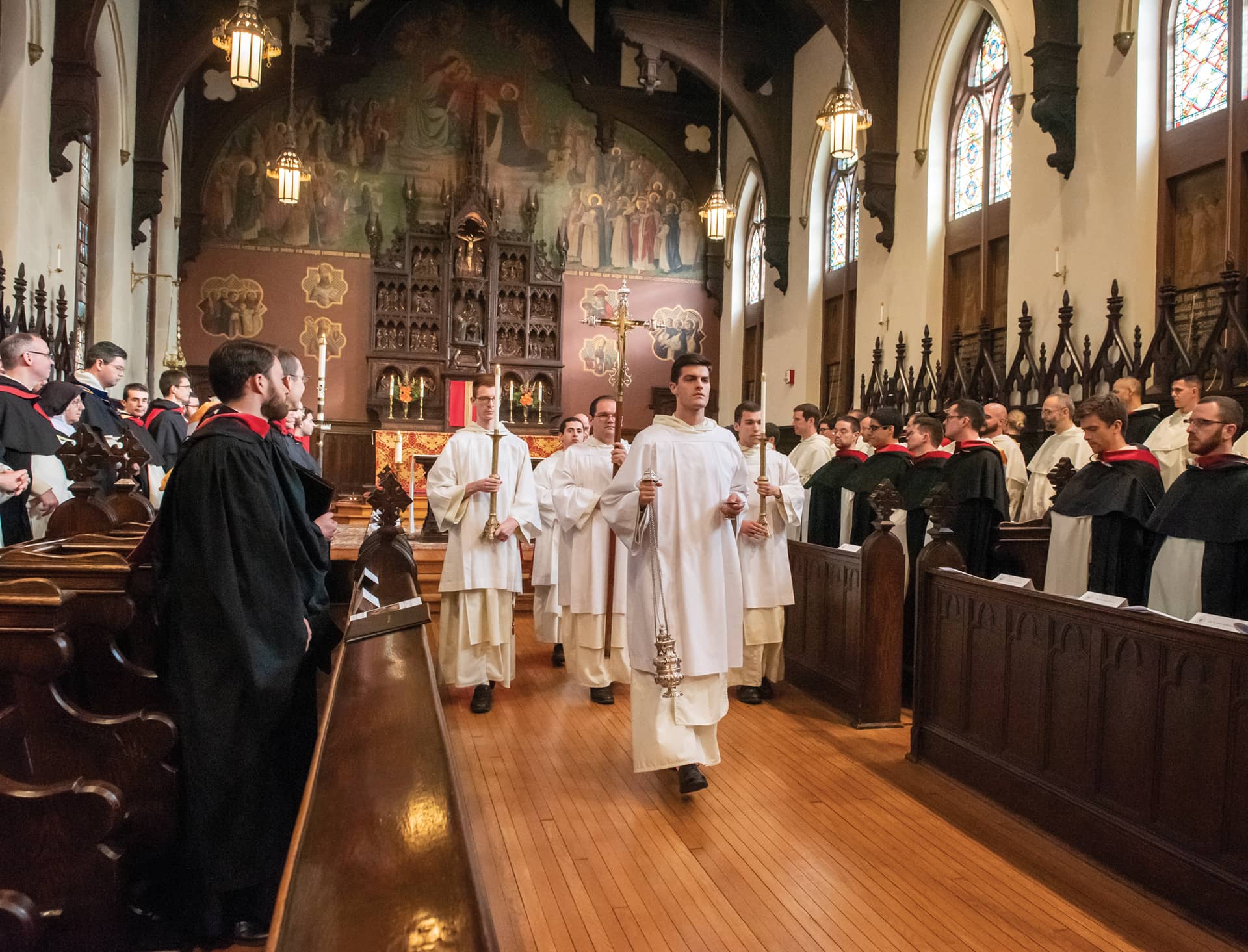
The Dominican House of Studies traces its mission to the preaching charism and Catholic intellectual heritage bequeathed to the Order of Preachers by its founder, St. Dominic de Guzmán. Dominic constructed a religious order international in scope yet decentralized in structure to address the needs of the Church by preparing preachers both intellectually informed and pastorally competent. This evangelizing mission is asserted in the basic claim of the Fundamental Constitution of the Order of Preachers that the Order was instituted “especially for preaching and the salvation of souls.”
The Mission Statement of the Pontifical Faculty
As a Roman Catholic pontifical institution belonging to the Order of Preachers and serving its evangelizing mission, enriched by the study of sacred doctrine, the Dominican House of Studies has as its primary purpose to provide a theological education that prepares students for ordained ministry in the Province of St. Joseph. Recognizing the wide appeal of a theological education in the Dominican tradition, the Dominican House of Studies also accepts other qualified students for its various degree programs. It is committed to forming its students in Catholic theology, grounded in the Word of God, shaped by the tradition of the Church, and enriched by philosophy. In this endeavor, it is faithful to the fullness of the magisterial teaching of the Catholic Church and committed to communicating that teaching in full. It takes St. Thomas Aquinas as its privileged teacher, in dialogue with contemporary thought. The Dominican House of Studies offers a comprehensive program of studies integrated with spiritual and pastoral components in order to foster students’ growth in holiness and equip them for preaching, pastoral ministry, scholarship, and other services to the Church. Furthermore, this faculty shares the fruits of its research and teaching with other academic institutions, the wider Church, and the public square, through its Dominican Theological Library, The Thomist, the Thomistic Institute, and other forms of academic, pastoral, and evangelical outreach.
Proposed unanimously by the Council of the Faculty, January 24, 2022
Approved by the Board of Trustees, November 10, 2023
useful links
Learn More
Explore useful links for you to use while you browse our website to learn more about our history, mission, and academic programs.


our education
Academic Rigor
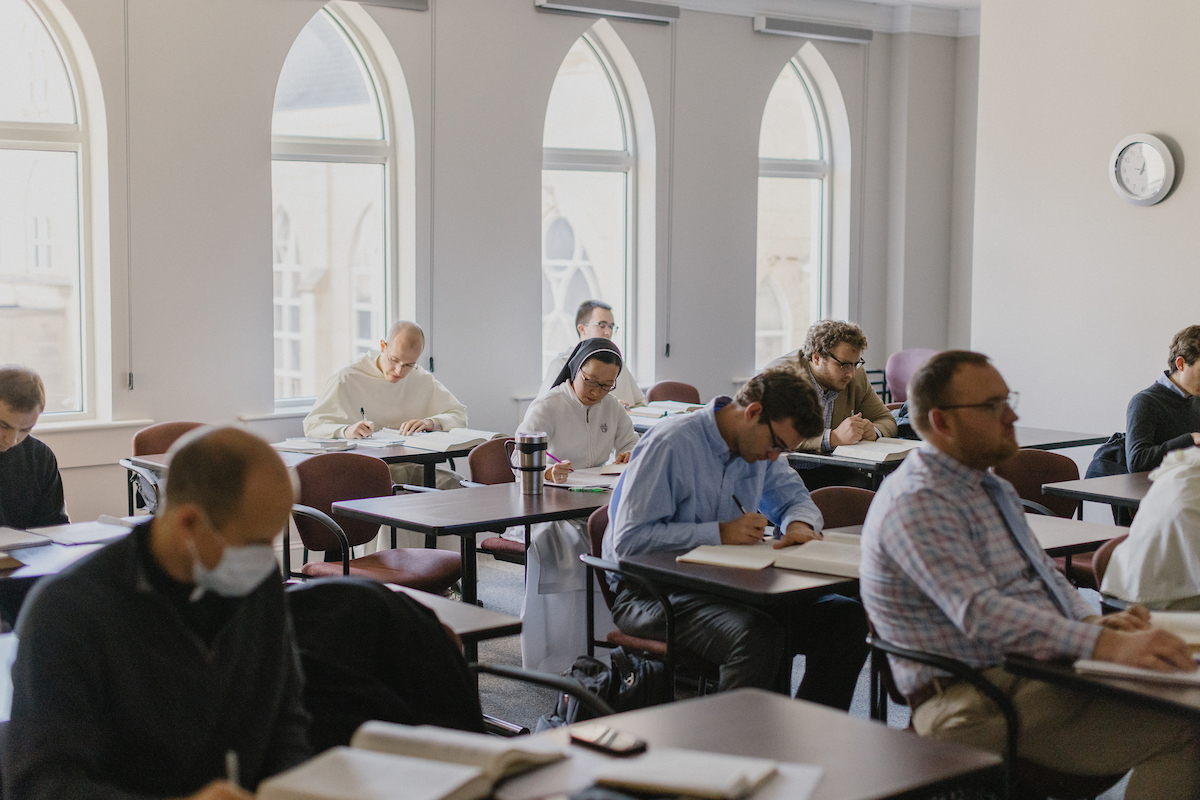
For the Dominican students, the spiritual formation is integrated with the academic and pastoral formation of the PFIC as well as the community life of the Priory.
This integrated formation for the residential Dominican students is a constitutive part of the mission of the institution. Because of the importance of the integration of the academic and spiritual life for all of its students, the PFIC also offers support for the spiritual lives of its nonresidential students, both religious and lay.
History
Lively interest in theological learning and the intellectual life was bequeathed to the Order of Friars Preachers by its founder, Saint Dominic. Responding to an acute need for well-prepared preachers, Saint Dominic conceived a plan of a mobile band of friars preachers and won the formal approval of Pope Honorius III on December 22, 1216.
 In the first decades of the Order’s life, St. Dominic sent friars to establish houses of study at the universities of Paris and Bologna where they could receive the strong doctrinal training necessary to support their preaching activity. These friars attracted many university professors and students to the Order, among them the brilliant young Thomas Aquinas (who entered the Order in 1244). Aquinas’s achievement crystallized the intellectual thrust of the Dominican apostolate from that time onward.
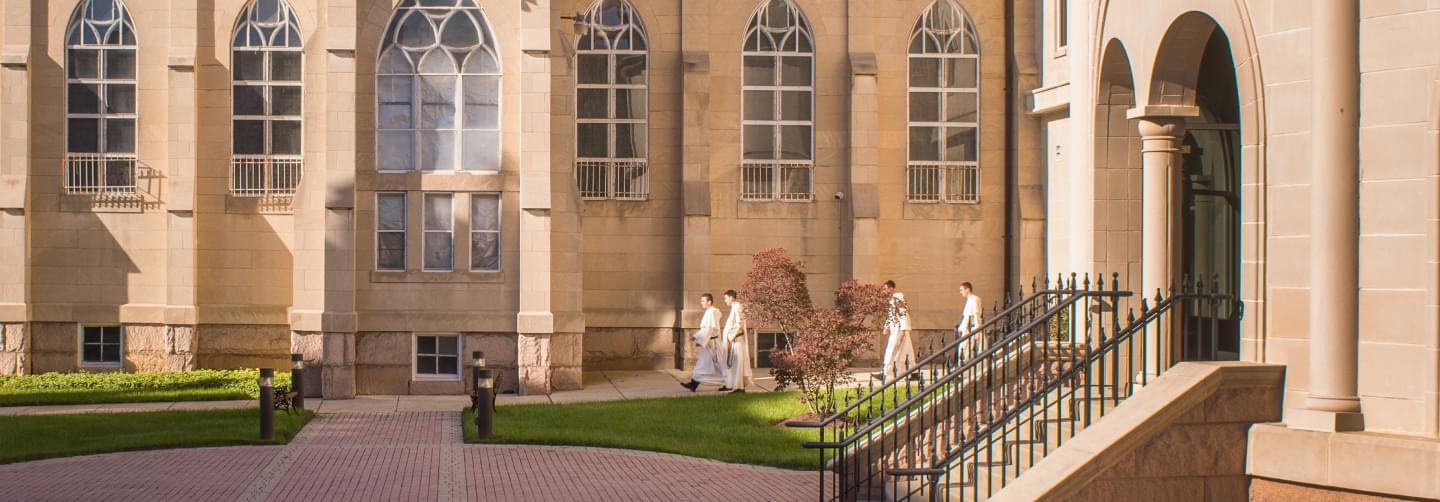
The Pontifical Faculty of the Immaculate Conception is heir to this long-standing tradition of theological excellence and preaching, and is linked to other Dominican centers of study throughout the world. Our faculty was established in 1834 in Somerset, Ohio, as the first studium generale of the Dominican Order in the United States. At the end of the nineteenth century, discussions began about moving it from Ohio to a location on the East Coast, and the provincial chapter of 1892 ordained that the studium be located in New Haven, Connecticut, near Yale University. In 1902, the new provincial, Fr. Lawrence Kearney, determined that Washington, D.C., would be the site for the institution, now called the Dominican House of Studies, and that it would be built near the newly-established Catholic University of America, thus conforming to the historic Dominican practice of establishing studia in major university settings. The groundbreaking for the new building on Bunker Hill Road (now Michigan Avenue) took place on April 23, 1903, with James Cardinal Gibbons of Baltimore, Archbishop Ryan of Philadelphia, and Father Kearney officiating.
 In 1941 the Sacred Congregation of Seminaries and Universities of the Apostolic See designated the Dominican House of Studies as a Pontifical Faculty of Theology with authorization to confer ecclesiastical degrees, and we officially became the Pontifical Faculty of the Immaculate Conception. At the time, we were only the second such faculty in the United States (after the Catholic University of America). Even today, there are only six pontifical faculties of theology in the U.S.
The PFIC became a member of the Washington Theological Consortium in 1967. In 1970, it joined the theological faculties of the Missionary Oblates of Mary Immaculate (O.M.I.) and the Oblates of Saint Francis de Sales (O.S.F.S.) as part of the Cluster of Independent Theological Schools. At about the same time, the House of Studies received civil accreditation from the Association of Theological Schools and the Middle States Commission on Higher Education in order to grant the civil degree of Master of Divinity (M.Div.); this accreditation was expanded in 1993 to include granting the civil degree of Master of Arts in Theology (M.A.), and, later, the doctorate (Ph.D.) in Theology (Thomistic Studies). The Cluster arrangement came to an end with the closing of Oblate College and De Sales Hall in 1996. Our faculty remained a fully-independent Pontifical Faculty of Theology, and since the 1990s has expanded its staff, its impact, and its reach. It now forms Dominicans and non-Dominicans, religious, priests, seminarians, and laity in the rich intellectual tradition of the Catholic faith.


support
It all starts at the DHS!
Investing in future leaders of the Dominican Order starts with an investment in their studies and formation.