
Tag: Creation
Life as God Sees It

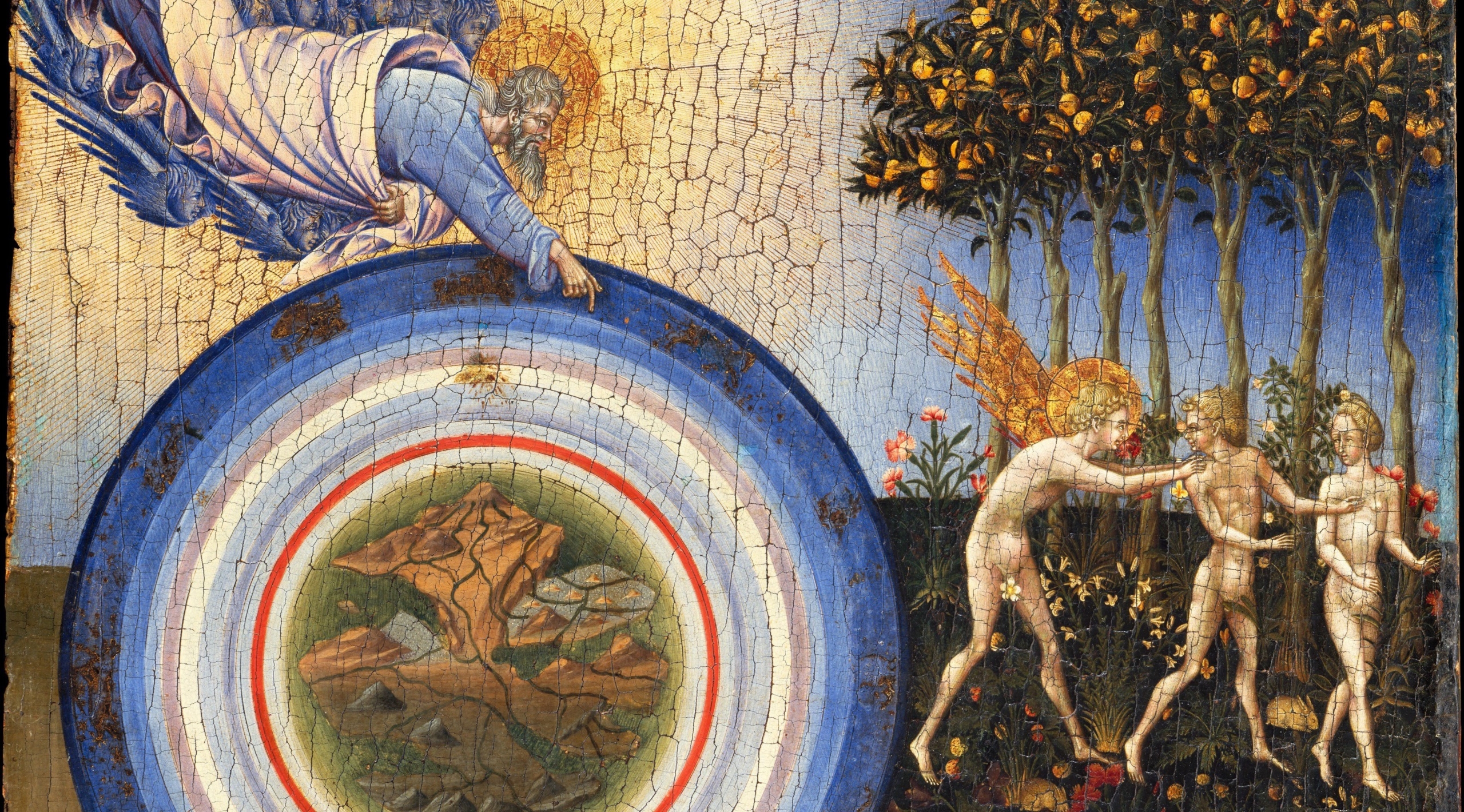
For four thousand winters Adam lay bound, bound by death, bound in death. So the medieval English hymn Adam lay ybounden has it. Not much is known about the hymn other than the parchment it is preserved on and speculations of its provenance. That is enough for our purposes. The one who hears it is pulled backwards to the beginning of recorded time, when Man deprived himself of Paradise. Now you shall be as gods (cf. Gen 3:5). Then a brother is murdered out of envy over his proper sacrifice (cf. Gen 4:3–8). The next moment: rain pours down and the deep wells up, drowning the world (cf. Gen 7:11). And in the blink of an eye: a man from Ur hears a call from a god he knows not (cf. Gen 12:1).
Yet this is not some mere record of change or an attempted retrieval of irretrievable moments. For God, all time is as one, and every single story ever lived in its truest form is known to him. God is not the god of the dead but the living (Matt 22:32). And only in God can we truly hope to see the glimpses of the eternal bearing of every free choice—for God meant it for good (Gen 50:20). We can see the meaning of history in our lives only in faith.
In this light, then, we may know that God saw the prostitute Rahab as a woman of ill-repute and as a woman predestined to save Israel: a sinner called to repentance by grace, for Joshua saved her and her family, brought her into the children of election (Josh 6:25, cf. Matt 1:5). After all, the name Joshua (also written “Jesus” in Greek) means “God saves.” We see the blood of the immolated Lamb of God in the scapegoat, sent over to Azazel (Lev 16:21–22). With the Tent of Meeting, (Ex 40:34), we see the Lady’s womb in which the dust of human flesh was divinized. At the rising of the sun nature bespeaks the rising of the eternal Son of Justice, or the uplifted Host surrounded by the golden rays of a monstrance. These stories and symbols are not dead records, irretrievable, but living and effective, sharper than a two-edged sword (Heb 4:12).
Yet there are many who say instead that the winding path through the woods is our home and not a passage to our true destination: struggle against the gloom or make your peace with it, there is no hope to be found; only the outward beauty of fleeting things, our existence suffocated with our last breath (Wis 2:2). This world, for them, is the only true life. Is that so?
No, it is not. Another way is offered—one only traversed with a special sight that sees farther than the most powerful telescope NASA could ever produce. “By your light we see light” (Ps 36:9). Jesus Christ commended those who believed what was before their eyes in his day. And in our day, he rewards those who believe what is placed before minds and hearts: “today this Scripture has been fulfilled” (Luke 4:21). And for some, the Lord offers miracles that attest to the words of life (ST II-II, q. 178, a. 1, cf. Matt 11: 2–6). Blessed are they who see the signs and wonders. Yet, as was said to Thomas, more blessed still are those who have believed without seeing (John 20:29), for no man has seen what God plans for those who love him (1 Cor 2:9), what the human heart was shaped out of clay for: do you believe this? (John 11:8).
Why do our lives happen this way or that? Are they meaningless? No, everything is meaningful—radically so: every tree and stone is pregnant with meaning; every life is a story told or yet-to-be. We have at last, as we travel forward, a choice. In which light do we walk? The one that knows this forest as the only world? Or do we walk by a different light?
✠
Originally posted on Dominicana Journal on 2/10/2026.
So Much Time and So Little to Do

We always seem to be busy with so little time and so much to do. There always seems to be a list of tasks a mile long. Tasks get added to that list faster than we can complete them. Many of these tasks became impossible during the height of COVID. Locked down with nowhere to go and no one to see, some of us had free time for the first time since we were children.
As restrictions from the pandemic have loosened we may be thinking, “What a relief to be busy again!” We no longer have to figure out what to do when there is nothing that needs to be done. We have all our responsibilities back, responsibilities we’d missed because they were what gave structure and meaning to our lives. This is what the lives of adult, productive members of society are expected to look like, but the pandemic made us ask, “What do I do with my time when there’s nothing more to produce and all my responsibilities have been met?
The pandemic may have brought this question to the forefront, but it is the same question that parents have to ask once their children leave home, that the aging have to ask as they retire from work. What do we do with the time when we aren’t working? The question can, of course, be asked earlier. It can even be asked now. In fact, as Christians, the commandment to keep holy the Sabbath compels us to ask this question every week. How do I rest on Sunday? How we approach Sunday can then serve as a paradigm for how we approach other situations where we find ourselves with time on our hands.
Sunday is meant to be a day of rest, a day of leisure. It’s a day when we spend our time doing things other than work. The worship of God is an obvious feature. Sunday should be a time when we pray, especially at Mass. While spending time with God is the most important way of resting on Sunday, it is not the only way. Leisure time can be spent enjoying the company of friends and family. This happens at church, but also Sunday dinner or visits to grandparents. These can be occasions for conversations wherein we all become philosophers, asking the deep questions of life while unpressed for time. We can think about who we are and stop long enough to recognize God’s grace in our lives. These activities show that resting on Sunday and enjoying leisure consist in far more than the absence of labor. These are the times wherein the bare necessities of survival have been met and the full flourishing of human life is expressed. For an extended discussion on what constitutes leisure, I highly recommend Josef Pieper’s, Leisure: The Basis of Culture.
Learning to enjoy leisure helps us flourish as wayfarers, but it also prepares us for eternity. As we allow the rest of Sunday to penetrate more of our lives, we prepare for eternal life when that rest will be our whole life. We will have no responsibilities in heaven. The worries and anxieties of Martha will no longer press upon us (Lk 10:38-42). Every need will be satisfied. Heaven will be all leisure. Alongside Mary, we will sit at the feet of Jesus. There will be only one thing necessary: to join all the saints and angels in worshipping and praising God. We will have so much time and so much to do!
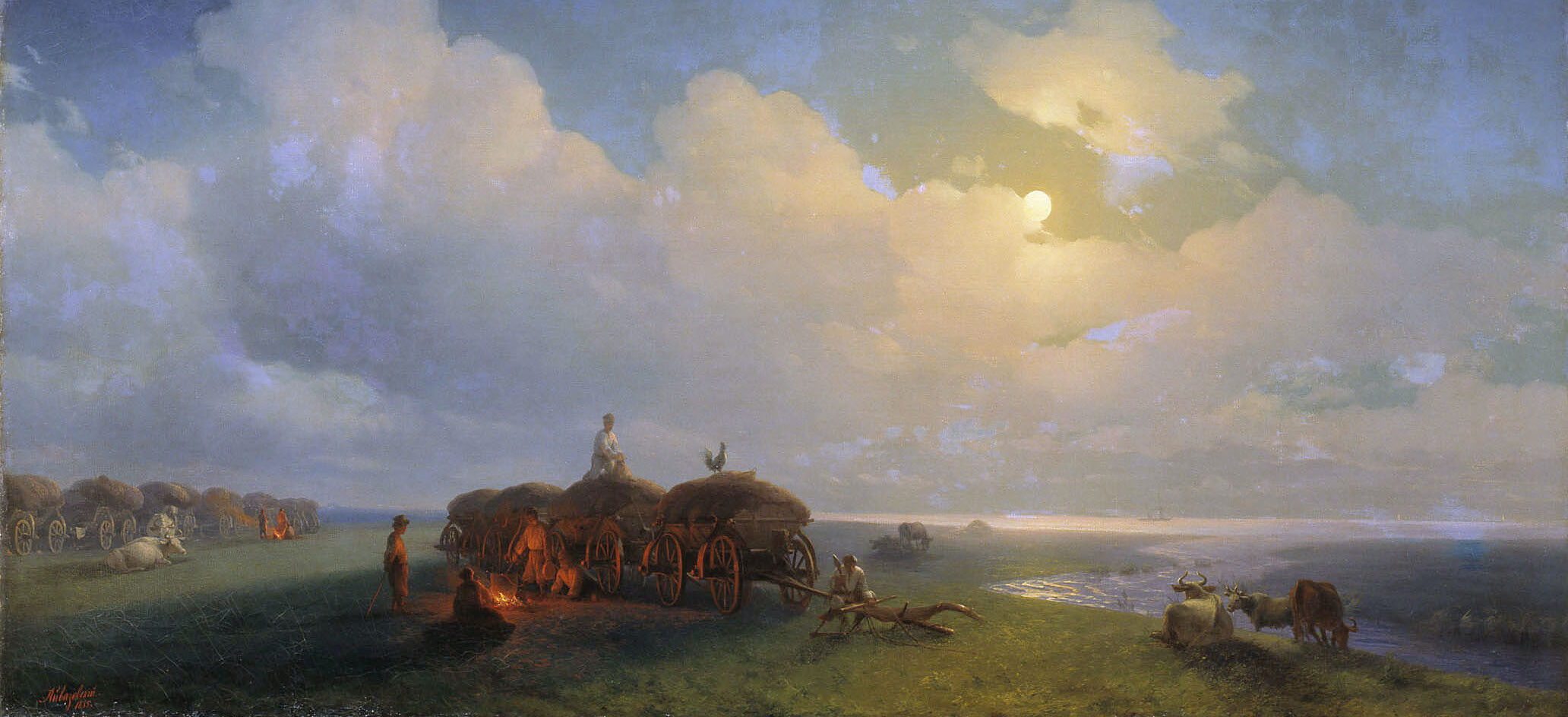
Image: Ivan Aivazovsky, Chumaks Leisure
Originally posted on Dominicana Journal