- Home
- Latest Content
- Was Dante a Thomist?
Was Dante a Thomist?
2026 Aquinas Lecture
on
January 23, 2026
in
Post
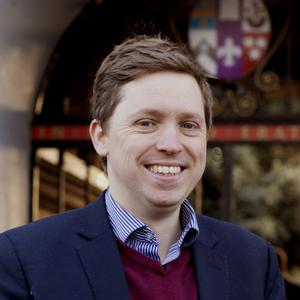
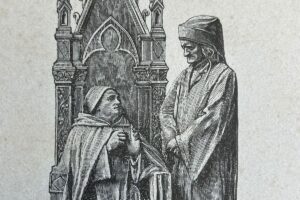
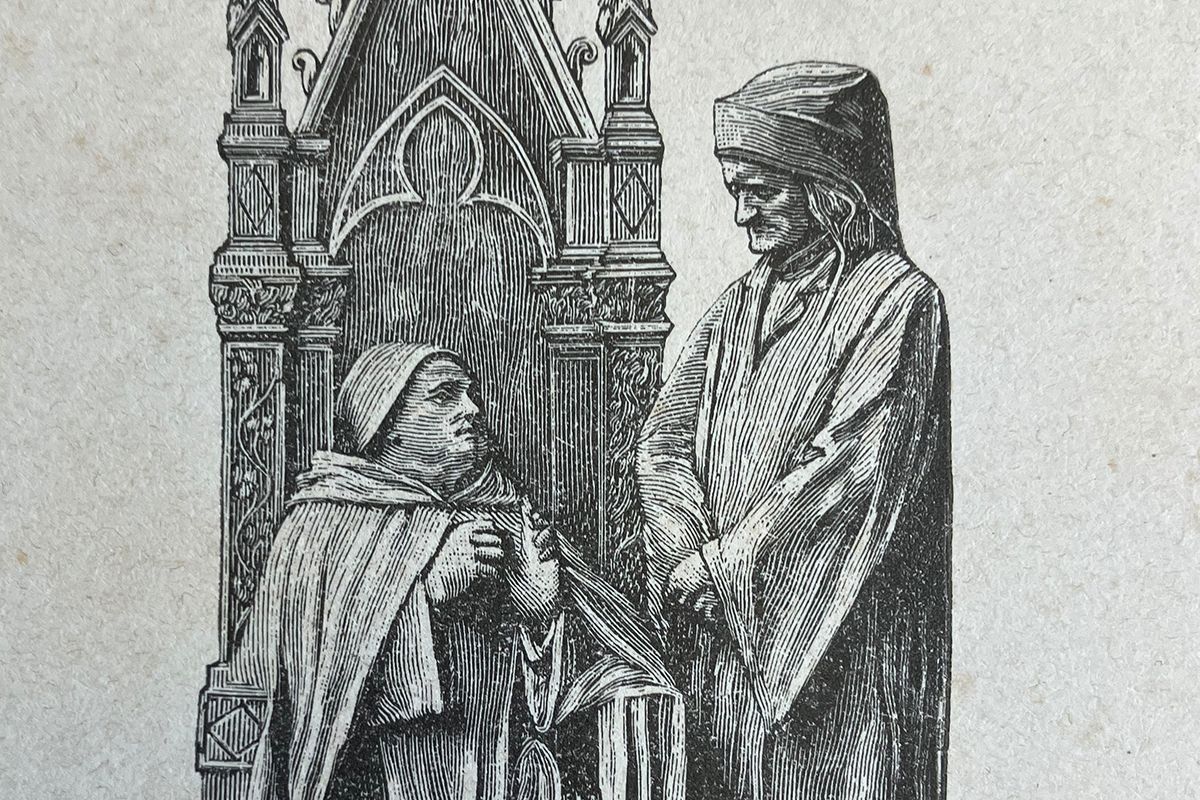
Dr. George Corbett thinks that most Dante scholars have been misunderstanding the Divine Comedy for a century, because of a scholarly prejudice that, in the 19th and 20th centuries, tried to suppress a major strand of interpretation of the great Italian author. Dante was not only a great poet and philosopher, but was a theologian – and, Corbett contends, he was a Thomist.
Today, most interpreters of Dante are ignorant of this tradition of Dante scholarship – and Corbett thinks it is urgent for us to recover it.
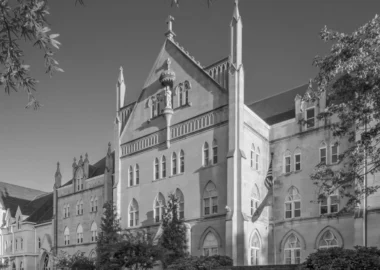
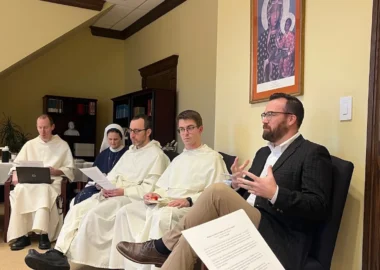
Corbett made his case at our annual Aquinas Lecture, organized for the Pontifical Faculty by our Thomistic Institute. He spoke to a capacity crowd at the Dominican House of Studies on January 20, 2026.
He has impressive academic credentials, serving as professor of theology at the University of St Andrews in Scotland, and is recognized as one of the leading contemporary Dante scholars. He has published several scholarly monographs on Dante, and most recently has edited a new translation of Dante the Theologian, by famous Dominican scholar Pierre Mandonnet, O.P. (1858-1936).
For centuries, Dante was regarded as expressing the wisdom of St. Thomas Aquinas in poetic verse. Starting in the nineteenth century, however, scholars began to reject any association of Dante with the Angelic Doctor – and this view was given classic expression by Étienne Gilson.
Corbett marshaled historical, theological, and literary evidence against Gilson’s view, to show that Dante not only knew Aquinas well, but deliberately wrote within a Thomistic framework. He recalled that both Pope Leo XIII and Pope Benedict XV explicitly regarded Dante as a disciple of Saint Thomas, situating the poet firmly within the Thomistic tradition.
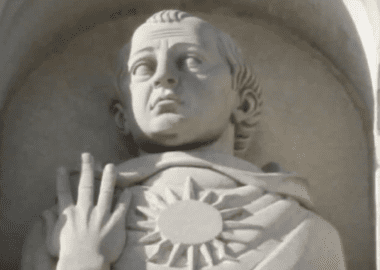
As evidence, Corbett pointed out that Dante gave St. Thomas one of the most prominent places in the Divine Comedy, devoting three full cantos to the poet’s encounter with the Angelic Doctor in the Paradiso, far more space than is given to any other figure besides Beatrice, Virgil, and Dante himself. Dante even describes Aquinas’s speech as the perfect likeness of Beatrice, a striking image that underscores Thomas’s role as a supreme theological guide. Most fundamentally, Corbett argued that the very structure of the Divine Comedy—its moral, metaphysical, and theological architecture—is itself Thomistic in character.
An animated question-and-answer period followed, allowing faculty and students to pursue the implications of Corbett’s argument more deeply. The evening concluded with informal conversation over wine and cheese.
The Pontifical Faculty of the Immaculate Conception is grateful to Dr. Corbett for helping us revisit—and discover anew—the Thomism of this great Catholic poet.