- Home
- Latest Content
- Studying in Service to the Church for the Renewal of Religious Life
Studying in Service to the Church for the Renewal of Religious Life
What greater love can we find?
on
February 12, 2026
in
Post
Alumni
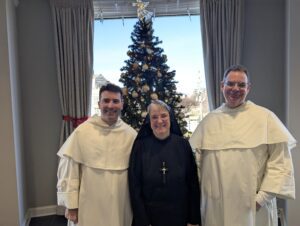
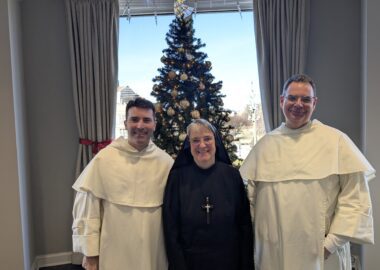
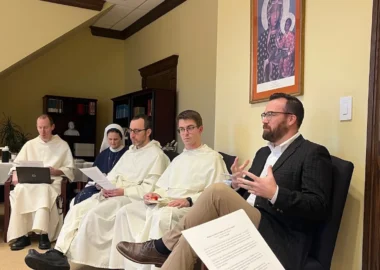
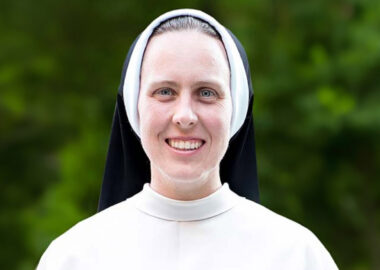
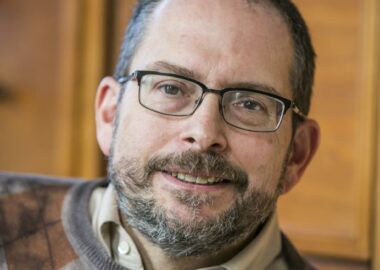
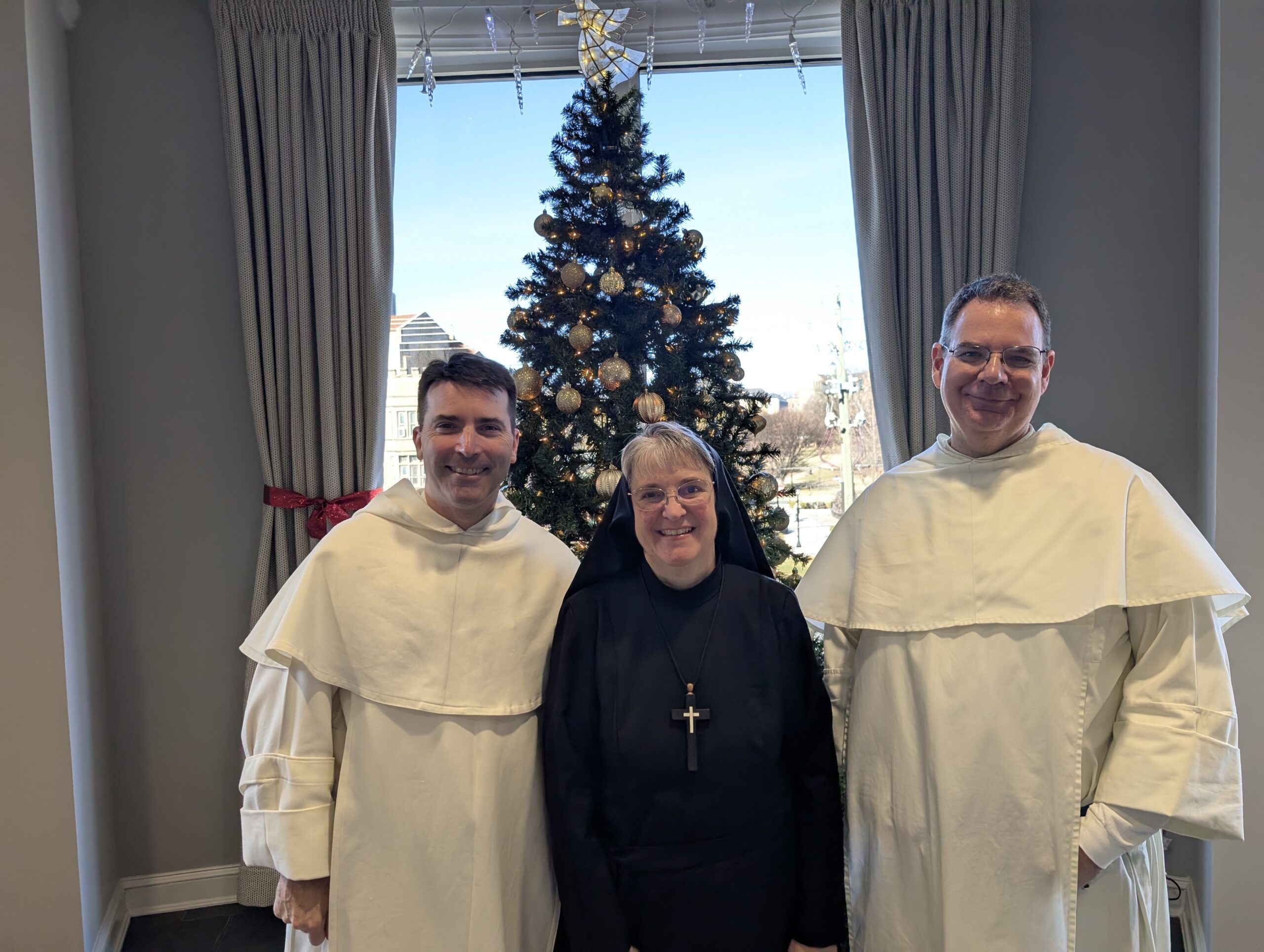
In December 2025, Sister Mary Joanna Ruhland, a perpetually professed member of the Religious Sisters of Mercy of Alma, MI, successfully defended her doctoral thesis, “The Renewal of Religious Life as a Path of Deification: A Thomistic Approach.” Following her defense, Sister Mary Joanna reflected on her time at the Pontifical Faculty of the Immaculate Conception (PFIC) and how the program has formed her for future service in the Church.
For consecrated religious, the decision to pursue studies often emerges from a dialogue of obedience. Sister Mary Joanna noted that her community chose the PFIC not only for its fidelity to the Magisterium but for its rigorous academic standards. A unique aspect of studying at PFIC is that the asceticism and discipline of study is integrated with living a life of grace through the sacramental life and contemplation of truth. She emphasized that the faculty views intellectual development as the “heart of the spiritual life.” This does not mean that one needs to be brilliant to be obedient in religious life, but that obedience as an expression of loving God with one’s whole heart, mind, and soul means using our God-given rational faculty to know Him and love Him as perfectly as possible. In relation to the intellectual life, Sister said, “DHS’s mission to cultivate every student’s inclination toward truth means that they are dedicated to help students recognize errors of thought that have led oneself or others away from God as First Truth. My dissertation contrasted a proposal for the renewal of religious life that inherently contained errors about the moral life, and, because religious life is the fullest expression of the moral life, about religious life. Recognizing these errors help us become more like God and in closer union with God by the perfection of our love for God. This deification prepares us to enjoy a most perfect union with God in heaven.”
She offered particular praise for the library staff, specifically Father John Martin. “As a religious, Father John Martin understands the vow of poverty that we make” she explained. “Voluntary poverty is not an obstacle to the intellectual life (which, again, is at the heart of the spiritual life). Rather, it is a particular approach to if and how we possess and use the material goods of this world; this approach is shaped by a greater good, namely, the divine good by which God blesses us, and the common life we share with others in the Church and in our religious community.” She described the staff as gracious and tireless in their willingness to help her locate necessary resources, especially when she was living in another country and didn’t have immediate access to the library.
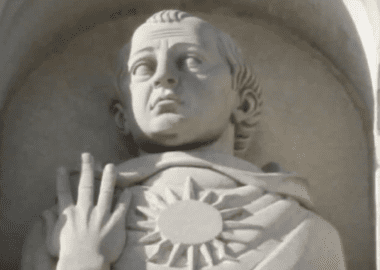
When asked if she gained new perspectives on Catholic theology, Sister highlighted the “architectonic” nature of Aquinas’ sacred teaching. Sister elaborated: “My doctoral studies helped me understand St. Thomas Aquinas’ sacra doctrina (sacred teaching) in a new and deeper way. St. Thomas Aquinas has a comprehensive vision of human life, not just “from womb to tomb,” but from creation to eternal life. His threefold vision of nature, grace, and glory, teaches that we are created by God for a particular end or purpose (namely, to enjoy eternal life with God in glory), and that we are created with a capacity to participate in our journey to that end. St. Thomas Aquinas considers our path of growth and development in terms of nature, grace and glory. We can be progressively united to God because our nature is created with a capacity to receive the grace of God. By this grace, and with our cooperation, our love for God and others is perfected. By this perfection or development, we are prepared to, God-willing, receive the beatific vision of God in heaven. When St. Thomas Aquinas teaches that religious life is a state of perfection, he thinks of this perfection in terms of our nature’s capacity to be deified (made like and united to God), how the grace we receive from God through the sacraments, virtues and Gifts of the Holy Spirit deifies our nature, and the fulfillment of this perfection in glory.”
This Thomistic vision has prepared her for whatever service is asked of her in obedience. Sister Mary Joanna recalled that during the application process, the Doctoral committee asked why she wanted to study for a doctorate. In considering this question, she realized that knowledge is not sought for its own sake, but for service, and she wanted to make an academic contribution in service to the Church, particularly for religious life – to help develop the theology of religious life in the Church.
Her education now allows her to speak with greater clarity to people of all ages. Whether giving vocation talks, teaching seminarians, or speaking with priests or consecrated religious, she can explain how religious life fulfills the mission of the Church and use Thomistic principles to address contemporary errors. She is able to articulate the unique privilege of a woman religious: a consecration that is a “total offering” where love is purified and the bond with God is strengthened.
Ultimately, these studies have prepared Sister Mary Joanna to help others recognize God as the First Truth. “God created each of us to one day know supreme happiness by enjoying him in eternal life. He wants us to be involved in our own growth in grace and charity; we know this because God sent his Son, Jesus Christ, to give us this grace and show us the way to eternal life.” She concluded, “What greater love can we find?”